Safe Coexistence of Human and Robot



























































Hello! Nowadays, you can easily find robots not only in manufacturing plants but also in our daily lives. Do you see a robot next to you right now?☺
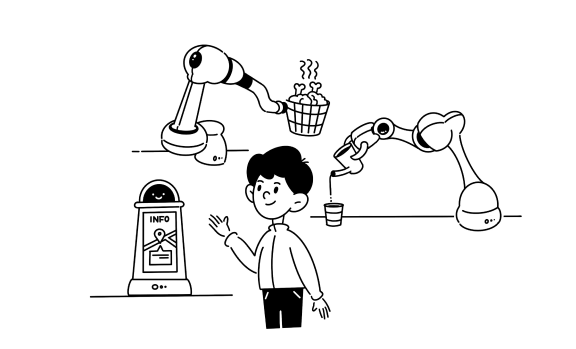
We already have various robots like guide robots, barista robots, and chicken robots working alongside us. But have you ever thought about when these ‘robots’ started entering our living spaces and what preparations were needed?
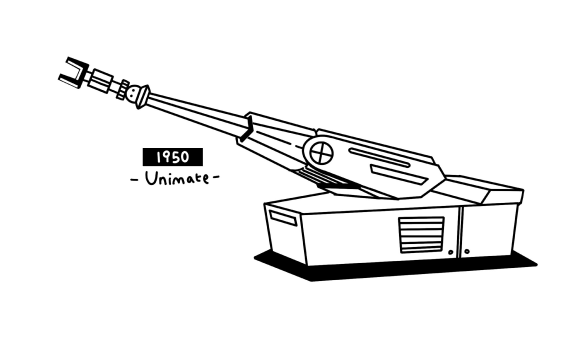
In the 1950s, the world's first industrial robot, "Unimate," was created. This robot, with an arm weighing nearly 2 tons, operated using hydraulic actuators and could lift metal parts weighing up to 150 kg. Since the introduction of Unimate, many industrial robots have continued to be used in factories to this day.
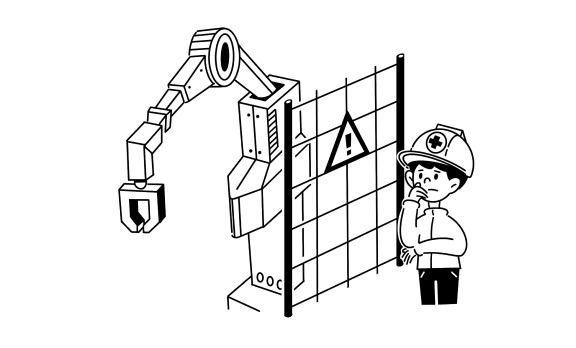
To safely use heavy and fast industrial robots, it was necessary to install physical barriers (fences) to separate the robot from the workers. This meant that they couldn't interact with actual people and required a lot of space, making it difficult to use them in our living environments.
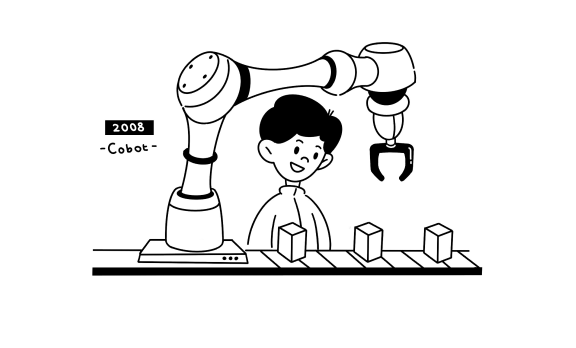
However, in 2008, a significant change occurred in industrial robots! With the introduction of "collaborative robots" (cobots) that can be used without fences, robots can now work directly alongside people.
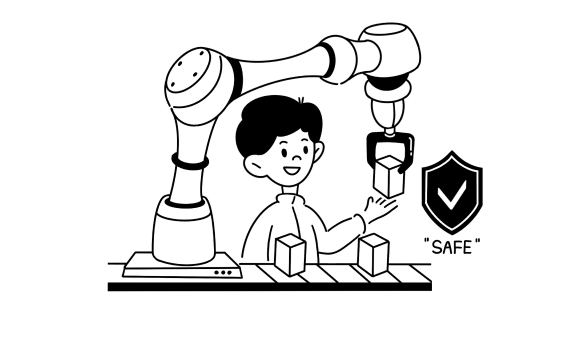
Once it was verified that "it is safe for people and robots to make contact," collaborative robots could be used freely without fences, allowing robots to be integrated into people's living spaces. Collaborative robots have overcome the limitations of traditional industrial robots and opened up a new market.
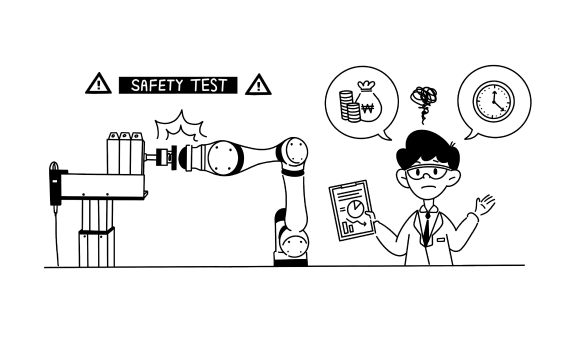
However, it wasn't as easy as it seemed. To verify that "it is safe to make contact," experiments needed to be conducted in environments where robots were installed, which required a lot of time and cost. Moreover, the number of scenarios that could be tested was very limited. As technology advanced, robots began to move differently based on the surrounding environment, and making it even more challenging to conduct experiments each time.
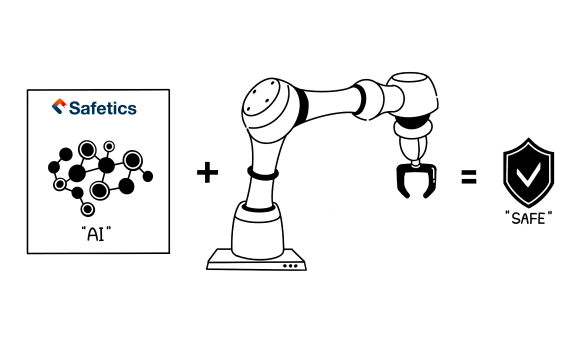
To address these issues, Safetics is developing the safety intelligence for robots. We are training robots to learn human safety awareness so that they can evolve from being simple machines and coexist safely with people.
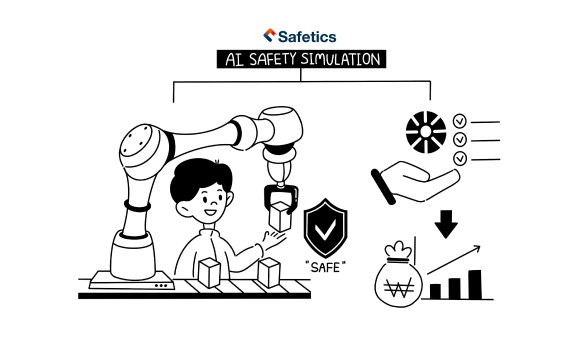
Through Safetics' collision safety simulation, you can verify that collaborative robots are safe even when in contact with humans. You can also assess risks by considering the robot's surrounding environment and ensure its safety. Additionally, you will receive recommendations for optimal speeds and safe layouts that maximize productivity while maintaining safety, allowing you to use robots both safely and efficiently.
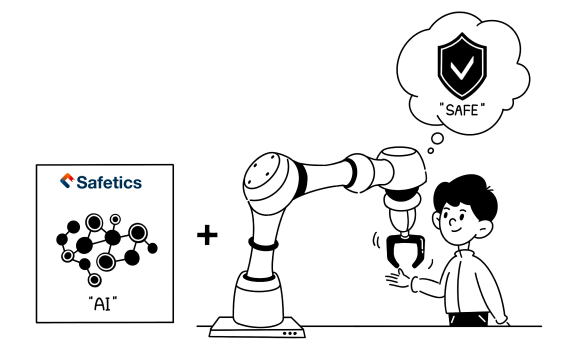
With safety intelligence, robots can analyze their surroundings like humans, decide if it's safe, and take the best motion. I hope you understand the reason behind our development of robot safety intelligence.
A world where robots and humans coexist safely doesn’t happen overnight. So, make use of Safetics technology right now! To move forward, we need early adopters like you. Thank you! ☺
“In the future, I'm sure there will be a lot more robots in every aspect of life.
If you told people in 1985 that in 25 years they would have computers in their kitchen, it would have made no sense to them.”
Pioneer of Robotics, Rodney Brooks
Hello! Nowadays, you can easily find robots not only in manufacturing plants but also in our daily lives. Do you see a robot next to you right now?☺
We already have various robots like guide robots, barista robots, and chicken robots working alongside us. But have you ever thought about when these ‘robots’ started entering our living spaces and what preparations were needed?
In the 1950s, the world's first industrial robot, "Unimate," was created. This robot, with an arm weighing nearly 2 tons, operated using hydraulic actuators and could lift metal parts weighing up to 150 kg. Since the introduction of Unimate, many industrial robots have continued to be used in factories to this day.
To safely use heavy and fast industrial robots, it was necessary to install physical barriers (fences) to separate the robot from the workers. This meant that they couldn't interact with actual people and required a lot of space, making it difficult to use them in our living environments.
However, in 2008, a significant change occurred in industrial robots! With the introduction of "collaborative robots" (cobots) that can be used without fences, robots can now work directly alongside people.
Once it was verified that "it is safe for people and robots to make contact," collaborative robots could be used freely without fences, allowing robots to be integrated into people's living spaces. Collaborative robots have overcome the limitations of traditional industrial robots and opened up a new market.
However, it wasn't as easy as it seemed. To verify that "it is safe to make contact," experiments needed to be conducted in environments where robots were installed, which required a lot of time and cost. Moreover, the number of scenarios that could be tested was very limited. As technology advanced, robots began to move differently based on the surrounding environment, and making it even more challenging to conduct experiments each time.
To address these issues, Safetics is developing the safety intelligence for robots. We are training robots to learn human safety awareness so that they can evolve from being simple machines and coexist safely with people.
Through Safetics' collision safety simulation, you can verify that collaborative robots are safe even when in contact with humans. You can also assess risks by considering the robot's surrounding environment and ensure its safety. Additionally, you will receive recommendations for optimal speeds and safe layouts that maximize productivity while maintaining safety, allowing you to use robots both safely and efficiently.
With safety intelligence, robots can analyze their surroundings like humans, decide if it's safe, and take the best motion. I hope you understand the reason behind our development of robot safety intelligence.
A world where robots and humans coexist safely doesn’t happen overnight. So, make use of Safetics technology right now! To move forward, we need early adopters like you. Thank you! ☺
“In the future, I'm sure there will be a lot more robots in every aspect of life.
If you told people in 1985 that in 25 years they would have computers in their kitchen, it would have made no sense to them.”
company_quotes3
Pioneer of Robotics, Rodney Brooks

Achieving goals requires a lot of energy. That's why we value the autonomy to set and implement our own goals and strategies.

We believe that achieving results is important. Therefore, we optimize resources to efficiently reach our goals.

We operate on the simple principle that an organization is a gathering of individuals. Therefore, we actively support personal growth.